Why I found atheism harder to believe than religion
There are a lot of definitions of atheism floating around these days. It didn’t used to be this way. The word once meant something fairly precise: a-theism - the belief that no God or gods exist. Clear, direct, and at least honest about being a belief.
That clarity didn’t survive long.
Today there’s a strong push to redefine atheism into something softer and more evasive. You’ll hear people describe themselves as agnostic atheists, or insist that atheism isn’t a belief at all but merely a lack of belief. You’ll hear comparisons to Santa Claus or fairies, as if belief in God were on the same epistemic footing as belief in mythical creatures.
Richard Dawkins captures this attitude neatly when he says:
“I am agnostic only to the extent that I am agnostic about fairies at the bottom of the garden.”
But rhetoric aside, almost everyone who uses the atheist label today shares something far more substantial than a lack of belief in gods. They share a positive satisfaction with a particular picture of reality - namely, that when all our observations and experiences are taken seriously, the physical world is all that exists. No minds behind it, no purpose beneath it, no reality beyond it.
For the sake of vocabulary cleanliness, I’m going to refer to people who are satisfied with that explanation as the Matters: those who believe that fundamental fields wrapped in spacetime are the final inventory of reality.
This view sees itself as the successor to religion - the post-superstitious worldview that supposedly powered the Enlightenment and gave rise to modern science, technology, engineering, and medicine.
That self-story conveniently ignores some stubborn facts. It ignores that the founders of modern science were, almost without exception, deeply theistic - to the point that some historians argue theism itself gave rise to modern science as a discipline. It ignores that the most accomplished scientists of the twentieth century were overwhelmingly theists, with atheism remaining a minority position even at the highest levels. It ignores that many scientists today are theists, or at least believe reality does not bottom out in matter alone, and that a non-trivial number openly argue their theism is not merely compatible with science, but necessary for it to make sense at all - and to keep its pursuits honest.
Ignoring all that, this is how the Matters understand themselves.
I counted myself among them for many years - the longest uninterrupted stretch of any worldview I’ve held. I didn’t leave because I wanted comfort or certainty. I left because, over time, I became dissatisfied with its explanatory power. More than that, I began to notice that the beliefs it quietly required were often more fantastical than the religions it claimed to replace.
What follows are those beliefs, arranged from the most immediate and practical - what’s happening inside our own heads - outward through society, humanity, the universe, and finally reality itself.
Once you see them laid out like this, it becomes hard to unsee them.
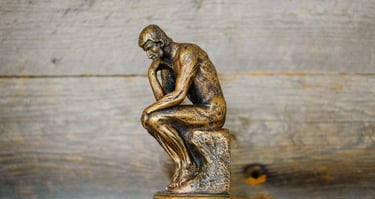
Inside Us - Consciousness, Thought, Reason
The first cracks appear right where we live: in our own minds.
One of the more surprising commitments of modern materialism is the claim that consciousness itself is not what it appears to be - and in some accounts, not real in any meaningful sense at all.
Daniel Dennett has been unusually blunt about this:
“Consciousness is an illusion. It’s not what it seems.”
The problem isn’t that consciousness is mysterious - everyone agrees that it is. The problem is that calling it an illusion doesn’t actually remove it. Illusions are experiences, and experiences require a subject. To say that consciousness is an illusion that does not require anyone to be conscious is to rely on language that quietly depends on the very thing it’s meant to explain away.
Closely tied to this is the status of human reason. Within a materialist framework, our reasoning abilities are the product of blind evolutionary processes. Those processes aim at survival, not truth. This isn’t a fringe claim; it’s central to the view.
Patricia Churchland puts it plainly:
“Boiled down to essentials, a nervous system enables the organism to succeed… Truth, whatever that is, takes the hindmost.”
And yet we are expected to trust this same reasoning apparatus when it delivers confident conclusions about the nature of reality, the origins of the universe, and the reliability of reason itself. The tension becomes unavoidable in the work of Alex Rosenberg, who embraces the implications without flinching:
“If naturalism is true, then we don’t have free will, and our beliefs are caused by neurobiology, not by reasons.”
At that point, belief stops being something you hold because it’s true and becomes something that happens to you because your neurons fired a certain way. Disagreement, under this view, is no longer about competing interpretations of reality but about cognitive malfunction.
Sam Harris frames it this way:
“A person’s beliefs are the product of prior causes of which they are not aware.”
Which means that when someone fails to arrive at the “correct” conclusions, the explanation is already on the table: their reasoning processes didn’t fire properly. I found it odd that a worldview so confident in its rationality had such a thin account of why rationality should be trusted at all.


Immediately Around Us - Value, Morality, Meaning
The same pattern shows up when we move from our inner lives to the world we navigate every day.
Officially, materialism denies the existence of objective moral facts. Morality is said to be an evolutionary by-product, a social convention, or a useful fiction.
Richard Dawkins is explicit:
“The universe we observe has precisely the properties we should expect if there is, at bottom, no design, no purpose, no evil, no good.”
And yet moral language never disappears. Some actions are wrong. Some things should never be done. These claims aren’t treated as personal preferences but as binding truths. The theory denies moral reality; the practice assumes it constantly.
The contradiction becomes sharper when it comes to suffering. If pain and evil are just the result of impersonal natural processes, then moral outrage is just another biological reaction.
And yet outrage is treated as mandatory.
Sam Harris insists:
“The worst possible misery for everyone is bad.”
Bad according to what standard? In a universe with no moral facts, outrage carries no authority beyond how strongly it’s felt.
The same issue appears with love. We’re told that love is nothing more than a chemical reaction in the brain, while hatred is a different chemical reaction - and yet one is declared vastly superior to the other.
Richard Dawkins again:
“We are survival machines - robot vehicles blindly programmed to preserve the selfish molecules known as genes.”
Molecules don’t rank themselves. The moment one chemical state is declared better than another, value has already been imported from somewhere else.
Then there’s meaning. Many materialists are refreshingly honest about the implications here.
Bertrand Russell wrote:
“All the labours of the ages… are destined to extinction in the vast death of the solar system.”
And yet we’re encouraged to live as if meaning exists, even while affirming that it does not. Meaning becomes an illusion we must carefully preserve, lest the truth become too disruptive. This always felt less like courage and more like containment.
Us as a Species - Humanity, Life
When the focus widens to humanity as a whole, the tensions don’t ease - they intensify.
Materialism tells us humans are complex biological machines, differing in degree but not in kind from other organisms.
Francis Crick put it bluntly:
“You, your joys and your sorrows… are in fact no more than the behaviour of a vast assembly of nerve cells.”
And yet humans are said to possess unique, equal, inviolable dignity and worth. Those values do not follow from the premises. They are asserted because abandoning them is unthinkable.
Religion, meanwhile, is treated as something that explains too much to ignore, but too much to take seriously.
Daniel Dennett describes it this way:
“Religion is a natural phenomenon… a product of evolutionary forces.”
On this account, religion is an evolved survival mechanism - useful, powerful, and deeply meaningful, but ultimately false. Which raises an uncomfortable implication: if evolution can produce widespread, emotionally compelling beliefs that are entirely false, why assume the same cognitive machinery suddenly becomes trustworthy when it critiques religion?
Finally, there’s the origin of life itself. Within a materialist framework, life must arise from non-life - not because we’ve observed it happen, but because the story requires it.
Richard Dawkins admits:
“We believe that life once arose spontaneously from non-life.”
Belief is doing a great deal of work here.
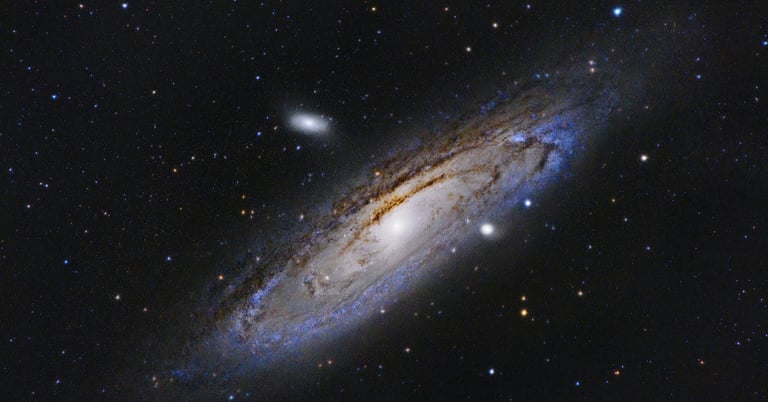
The Universe - Existence
When the question shifts from life to existence itself, explanation simply stops.
Asked why the universe exists at all, the answer is often that it just does.
Bertrand Russell again:
“The universe is just there, and that’s all.”
Materialism criticises theism for positing an uncaused reality, then quietly does the same thing - only calling it the universe.
Reality as a Whole - Explanation Itself
Above all these sits one final belief: that science explains everything - consciousness, reason, morality, meaning, even the belief in science itself.
This claim is not scientific. It is philosophical. Science presupposes logic, mathematics, consciousness, and the uniformity of nature; it does not account for them. And yet the Matters insist that science can, in principle, explain even that insistence.


The Things That Need Explaining
At some point, it’s worth pausing and asking a simple question: what do we actually know to be true before we start explaining things away?
Not what we speculate about.
Not what might turn out to be the case one day.
But what we already rely on - constantly and inescapably - simply to function as human beings.
We know, first of all, that consciousness is real. Not hypothetically real. Not provisionally real. It is the one thing each of us encounters more directly than anything else. Every doubt, every argument, every denial presupposes it. You cannot discover that consciousness is an illusion without being conscious while doing so. Whatever else consciousness turns out to be, it is not optional data.
We also know that our minds give us access to objective features of the world. Not perfectly or exhaustively, but reliably enough that we can build bridges, cure diseases, predict eclipses, land probes on other planets, and alter the physical structure of reality in repeatable ways. We don’t merely observe the universe; we interact with it causally through thought. We form intentions, reason about them, and then watch the physical world respond. That isn’t poetry - it’s daily life.
Which brings us to free will. Even the person who claims not to believe in it must first decide that they don’t believe in it before saying so. That decision isn’t a passive neurological spasm; it’s an act. We experience ourselves as agents, not as spectators of our own behaviour. You can deny that experience in theory, but you cannot escape relying on it in practice. The denial itself depends on the very thing being denied.
Then there is morality - not as a theory, but as lived reality. We all know, prior to argument, that some things are genuinely good: love, kindness, compassion, patience, justice, mercy, grace, peace, hope, truth, creativity, beauty. These aren’t arbitrary preferences. They carry weight. They bind us. They demand allegiance even when they cost us something.
And we also know, just as clearly, that other things are genuinely bad: cruelty, hatred, animosity, destruction, selfishness, pride, deceit. We don’t merely dislike them; we recognise them as wrong - not inconvenient or inefficient, but wrong.
The same is true of suffering. Pain and evil are not just unpleasant features of the world. They feel out of place. They violate something. Even though suffering is pervasive, it has never been normalised. We don’t accept it the way we accept gravity or entropy. We resist it. We protest it. We treat it as something that should not be here - which is a strange reaction if it is merely the natural output of a morally indifferent system.
We also know something important about ourselves as a species. Yes, we share genetic, biological, and phenotypic similarities with animals. But we are far more dissimilar from animals than we are similar. We produce art, mathematics, moral systems, legal frameworks, music, philosophy, science, and religion. We ask questions about meaning, truth, beauty, and destiny. No other animal does this - not even close.
We know the biological substance from which we are formed, but we also know, just as plainly, that we are not merely the sum of that substance. And even the phrase the sum of our parts collapses under scrutiny. Which parts, exactly? Tissues? Cells? Molecules? Atoms? Fundamental particles? Fields? At that level, the idea of something being “solid” isn’t even coherent anymore. Matter itself dissolves into abstractions that begin to sound suspiciously like metaphysics rather than mechanics.
It’s also worth noticing that the perception of reality beyond mere physical description is not primitive. Religion did not arise because humans were too stupid to understand the world. It arose relatively late, alongside symbolic thought, language, art, and moral reflection. It represents a higher-order sense - not a regression to animal instinct, but a reaching beyond it.
And finally, we know something about the origin of the universe and of life itself. Not in detail - but enough to know that “fundamental fields wrapped in spacetime just existed” and “particles collided until meaning happened” are not explanations; they are placeholders. Hand-waving from non-existence to existence, or from physics to chemistry to biology to DNA to consciousness, does not remove the mystery - it just baptises it in the fires of another deity. At that point, the mystical has been given a new name: Chance plus Time. A god by any other name.
Which brings us to the core issue.
If base reality were truly nothing more than fundamental fields wrapped in spacetime, then running toward that explanation should feel clarifying. It should reduce mystery. It should cohere with what we already know most directly and confidently.
Instead, it does the opposite.
It asks us to distrust our consciousness, our reason, our moral knowledge, our sense of agency, our experience of value, our recognition of beauty, our protest against suffering, and our understanding of ourselves - all while relying on those very faculties to make the case.
At some point, it takes more effort to run away from the data than to face it.
And that’s where the answer offered by the Matters stopped being merely unconvincing to me — and started feeling close to irrational.
Why This Was the End of the Road for Me
I didn’t leave this worldview because it was uncomfortable or bleak. I left because once I took it seriously, it asked me to believe things that were more extravagant than the beliefs it mocked - while insisting it was the only sober, grown-up option on the table.
Once I saw it, I couldn’t unsee it.
Think about it.